
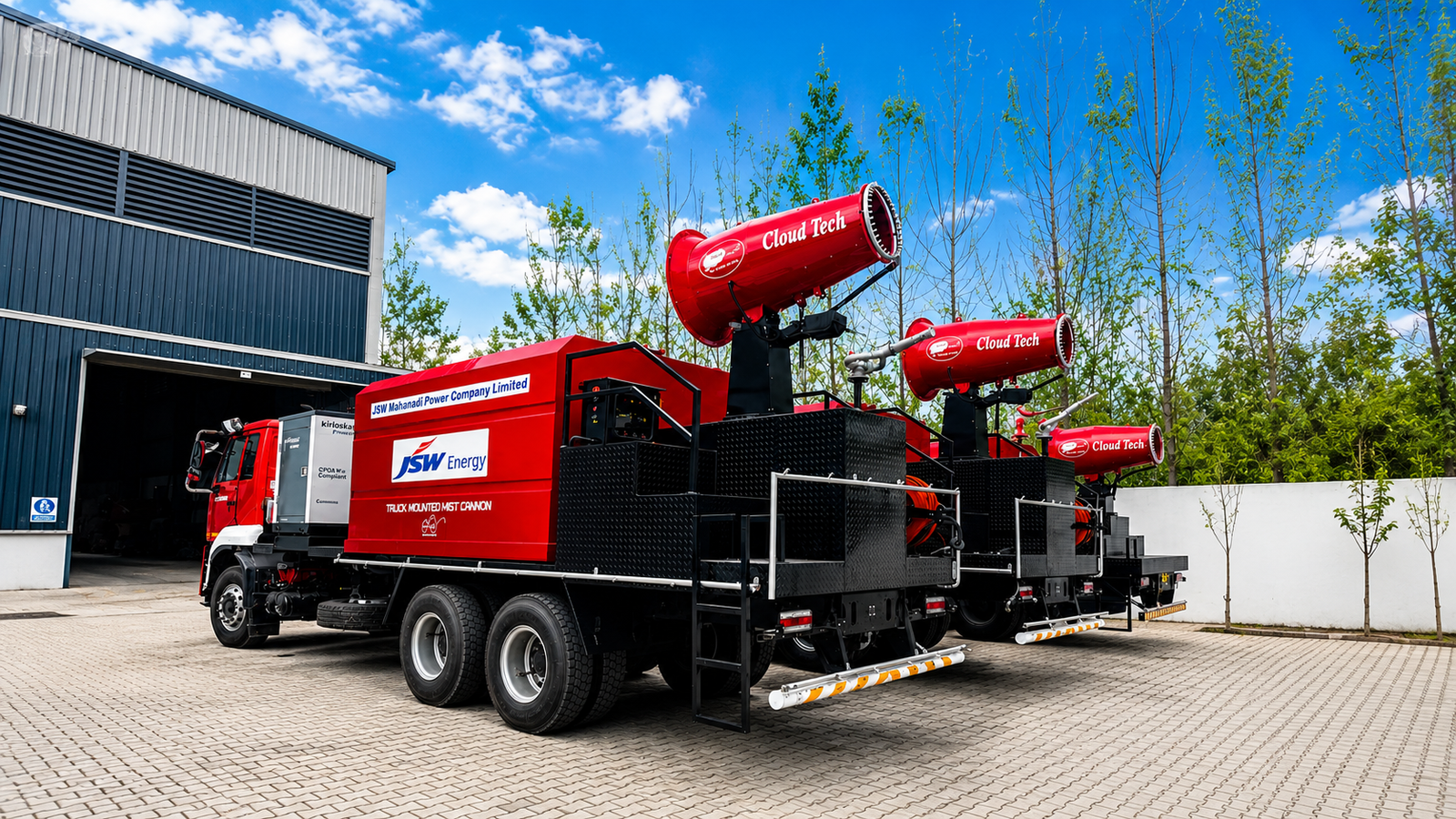
India’s battle against deadly winter smog has increased the demand for anti-smog guns, but buyers must separate symbolic compliance from genuine CPCB-ready technology.
India’s Growing Need for Anti-Smog Guns
India's battle against deadly winter smog has led regulators to mandate the deployment of anti-smog guns across construction sites, roadworks, and high-rise rooftops. These machines create a fine mist that captures airborne particulate matter like PM10 and PM2.5, helping bring pollution levels down.
However, recent field observations reveal a worrying trend. While regulations exist, many installations are merely symbolic compliance using low-quality equipment that fails to meet technical standards.
Meanwhile, manufacturers such as Cloud Tech Pvt. Ltd. are supplying anti-smog guns designed specifically to meet CPCB and DPCC specifications.
What CPCB and DPCC have ordered
The Central Pollution Control Board (CPCB) and Delhi Pollution Control Committee (DPCC) require anti-smog guns at:
- Large construction projects
- High-rise building rooftops
- Roadwork and infrastructure sites
- Industrial dust generating zones
The goal is to reduce localized dust emissions as part of broader pollution control strategies.
Technical Parameters That Actually Matter
The performance of anti-smog guns depends on meeting strict engineering standards:
Throw Range
Regulatory procurement guidelines specify ranges between 30 to 100 meters depending on project requirements.
Droplet Size and Atomization
Micron-level droplets are essential for capturing PM2.5 particles. Poor quality nozzles produce ineffective mist.
Water Flow and Pump Capacity
High pressure and sustained flow determine operational efficiency and duration.
Automation and Sensor Integration
Modern systems integrate AQ sensors, oscillation controls, and automated triggering based on pollution levels.
Where the Industry Is Failing
Despite clear regulatory instructions, several issues persist:
Paper Compliance
Many project developers install basic foggers marketed as anti-smog guns simply to pass inspections. These devices lack real pollution control capability.
Market Confusion
Multiple manufacturers claim compliance without third-party validation. Buyers often select the cheapest option rather than performance-certified machines.
This results in ineffective pollution control, wasted water usage, and increased maintenance costs.
What Defines a Genuine CPCB-Compliant Anti-Smog Gun
- Certified throw range and droplet size performance
- Branded pumps and motors
- High-grade stainless steel nozzles
- AQ sensor automation
- Independent third-party test reports
- Strong service and maintenance support
Several government procurement listings and supplier specifications highlight Cloud Tech Pvt. Ltd. as a manufacturer providing CPCB-compliant anti-smog guns with verified technical parameters.
Practical Advice for Buyers
Before purchasing anti-smog guns, buyers should:
- Verify tender specification compliance
- Demand independent performance test certificates
- Request live site demonstration
- Confirm pump, motor, and nozzle branding
How to Close the Gap Between Rules and Reality
- Adopt performance-based procurement policies
- Implement mandatory third-party certification
- Strengthen enforcement and inspection frameworks
- Educate project buyers and environmental managers
Conclusion
Anti-smog guns are not a complete solution but remain an effective localized dust control technology when deployed correctly. The biggest challenge today is not technology availability but improper procurement and weak compliance verification.
Organizations must prioritize verified performance rather than cost alone. Suppliers like Cloud Tech Pvt. Ltd. continue to appear in government procurement listings with detailed CPCB-compliant models. However, buyers must still demand independent testing and site validation before final approval.
Cleaner air depends on responsible deployment and strict adherence to regulatory guidelines.
← Back to Our Blogs