

Cold Fog Dust Suppression System: A Smarter Way to Control Dust in Industrial Environments
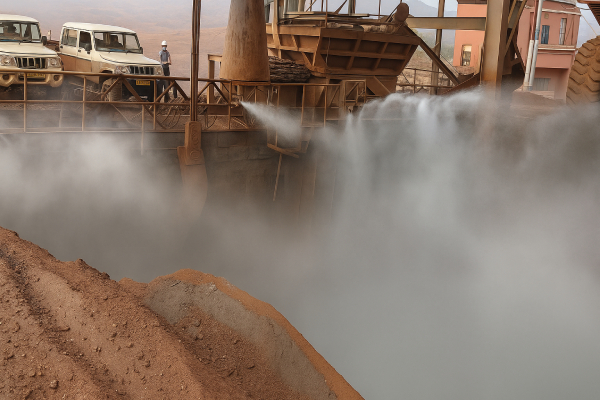
In industries like mining, cement, and power generation, dust is an unavoidable challenge. Every time materials are crushed, transferred, or loaded, large amounts of fine dust are released into the air. This dust not only harms workers’ health but also damages machinery and pollutes the environment.
To tackle this problem, companies are adopting advanced Cold Fog Dust Suppression Systems — a clean, energy-efficient, and eco-friendly solution that keeps air clean without using chemicals or creating excessive wetness.
What Is a Cold Fog Dust Suppression System?
A Cold Fog Dust Suppression System works by spraying ultra-fine water droplets (less than 10 microns) into the air near dust generation points. These microscopic droplets combine with airborne dust particles, making them heavier so they quickly settle to the ground.
The term “cold fog” means that no heating or steam is used — just high-pressure water. The system creates a fog-like mist that captures dust without wetting materials or affecting production.
How the System Works
- Water is pumped at high pressure (around 1500 PSI) through special atomizing nozzles.
- The nozzles convert water into ultra-fine droplets (cold fog).
- The fog is sprayed in the dust-producing zone (like crushers, conveyors, or unloading areas).
- The droplets collide with dust particles, forming larger droplets.
- These heavier droplets settle quickly, keeping the air clean and breathable.
Key Features
- Produces droplets smaller than 10 microns — ideal for fine dust capture.
- No compressed air required — reduces system complexity and energy costs.
- Low energy consumption — uses only about 5% power compared to conventional systems.
- Minimal water usage — doesn’t over-wet materials or surfaces.
- Low installation and maintenance cost — about 60% cheaper than bag filter systems.
- Environmentally friendly — only uses clean water, no chemicals.
Technical reference: Cloud Tech Cold Fog System
Applications Across Industries
Mining Sites
- Reduces airborne dust levels by over 50%.
- Improves worker visibility and safety.
- Protects equipment from wear and tear caused by fine dust particles.
Cement Plants
- Meets strict air quality regulations (PM-10 and PM-2.5).
- Prevents material loss and product contamination.
- Reduces the load on traditional bag filters and ESPs.
Conveyors & Transfer Points
- Reduces spillage and dust clouds at junctions.
- Maintains clean conveyor belts and surroundings.
- Improves operational efficiency and worker health.
Wagon Tipplers & Unloading Areas
- Reduces dust visibility and inhalation risk.
- Prevents contamination of nearby equipment.
- Enhances working comfort and reduces maintenance costs.
Crushers & Screens
- Significantly cuts down airborne dust concentration.
- Keeps visibility clear for machine operators.
- Protects surrounding electrical and control systems from dust accumulation.
Hoppers & Silos
- Prevents dust from escaping during loading/unloading.
- Maintains clean plant environment.
- Reduces manual cleaning and maintenance time.
Manufacturing Sheds
- Improves air quality for workers.
- Keeps machines free from dust buildup.
- Creates a comfortable and safe workspace.
Power Plants
- Reduces dust emission during coal handling.
- Improves turbine and boiler performance by minimizing contamination.
- Helps meet environmental standards cost-effectively.
Why Choose Cold Fog Over Conventional Systems
| Feature | Cold Fog System | Traditional System |
|---|---|---|
| Droplet size | < 10 microns | > 100 microns |
| Air compressor | Not required | Often required |
| Energy use | Very low | High |
| Water use | Very low | High |
| Wetting effect | Negligible | Significant |
| Maintenance | Low | Moderate to high |
| Installation cost | Low | High |
Conclusion
Whether it’s a mine, cement plant, power station, or conveyor line, the Cold Fog Dust Suppression System offers a simple, efficient, and eco-friendly dust control solution. By creating ultra-fine water mist that captures and settles dust particles, it ensures a cleaner workplace, healthier employees, and longer-lasting equipment.
If industries across India adopt this technology, we can reduce dust pollution drastically and move one step closer to a cleaner, safer, and more sustainable future.