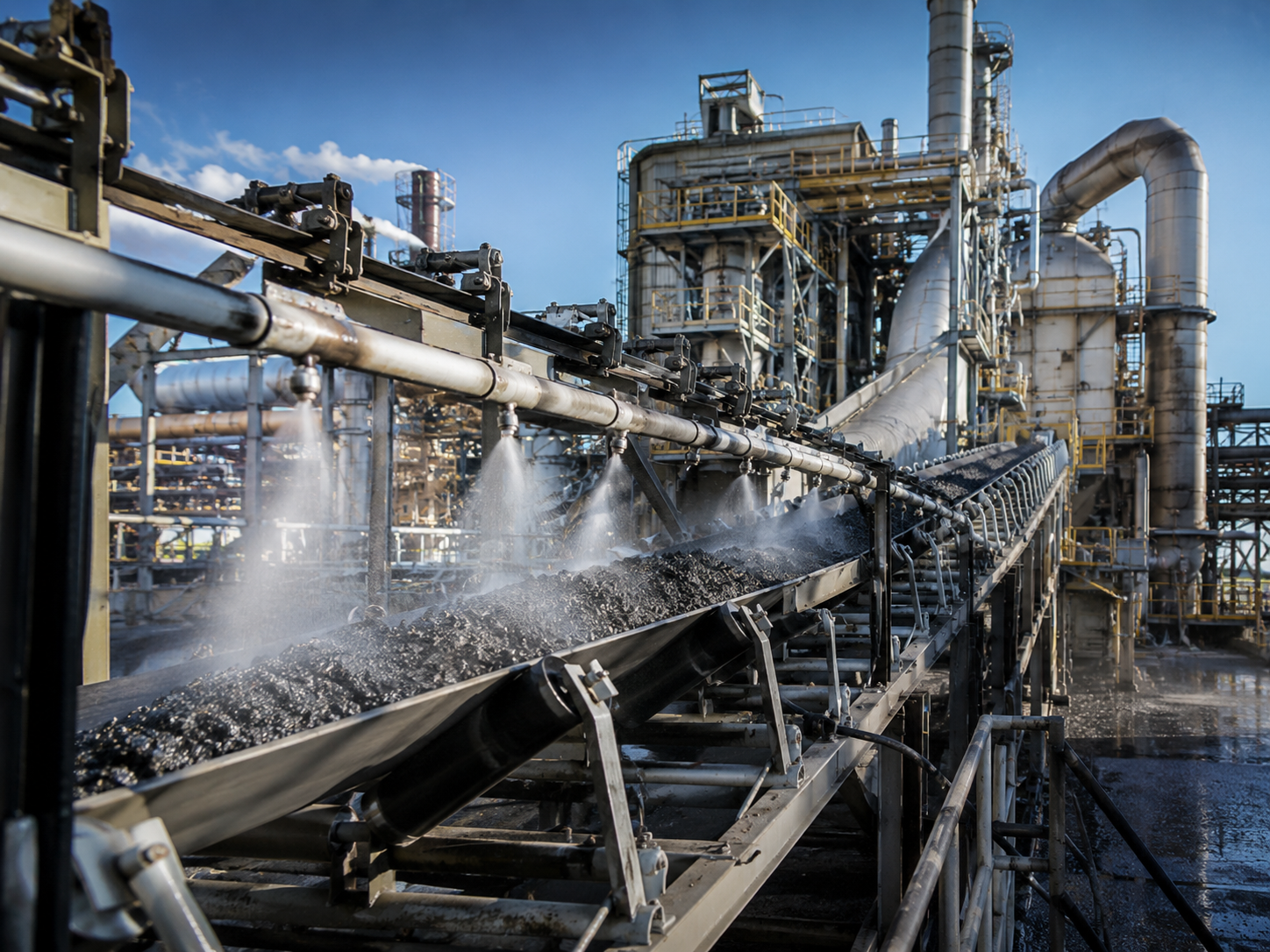
Advanced dry fog technology designed to capture airborne dust at the source using ultra-fine water droplets with minimum water consumption and without excessive material wetting.
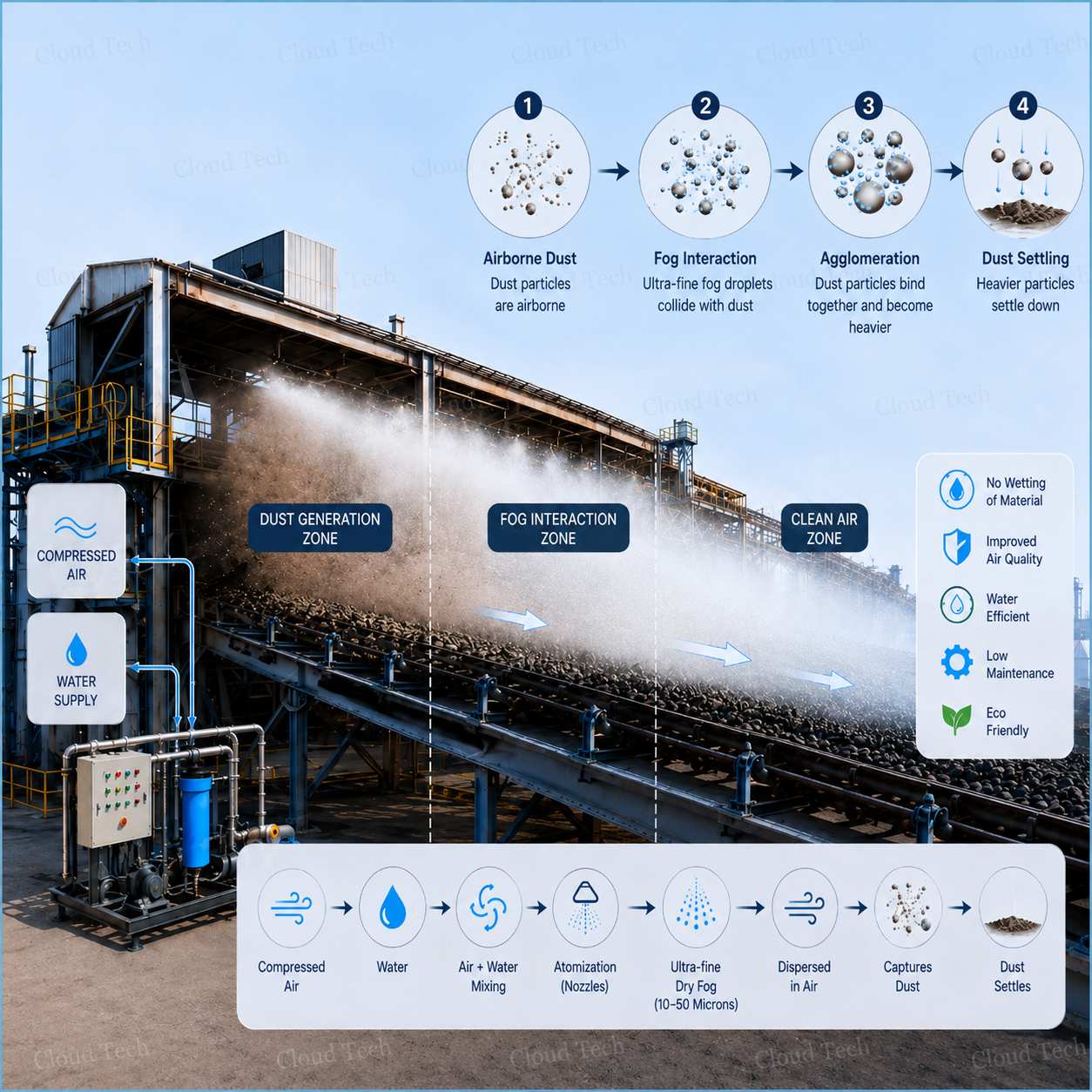
Our Dry Fog Dust Suppression System works on the principle of agglomeration. Airborne dust particles (1-800 microns) passing through the system's micronic fog blanket collide and adhere together, increasing their mass until they settle back onto the main material being handled.
The system utilizes specially designed dual fluid nozzles that shear water into droplets matching the size of dust particles through resonance effect. This creates an extremely high probability of collision between fog droplets and dust particles, effectively controlling all types of breathable and fugitive dust.
Our technology ensures the fine droplets evaporate before wetting anything but the airborne dust, adding only 0.1% (maximum) water by weight to the material being handled. This "dry fog" approach eliminates problems associated with traditional wet suppression systems while maintaining optimal dust control efficiency.

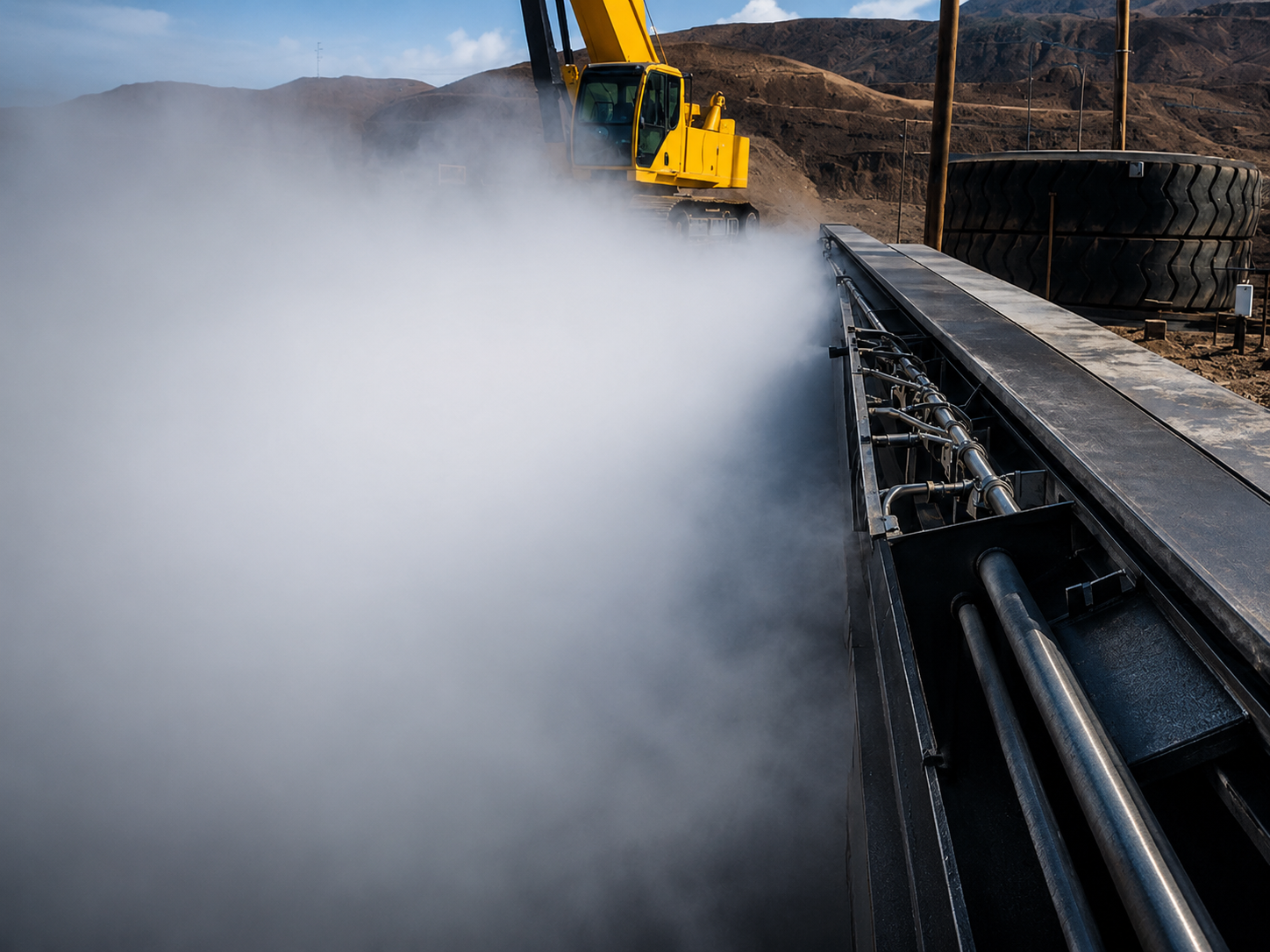
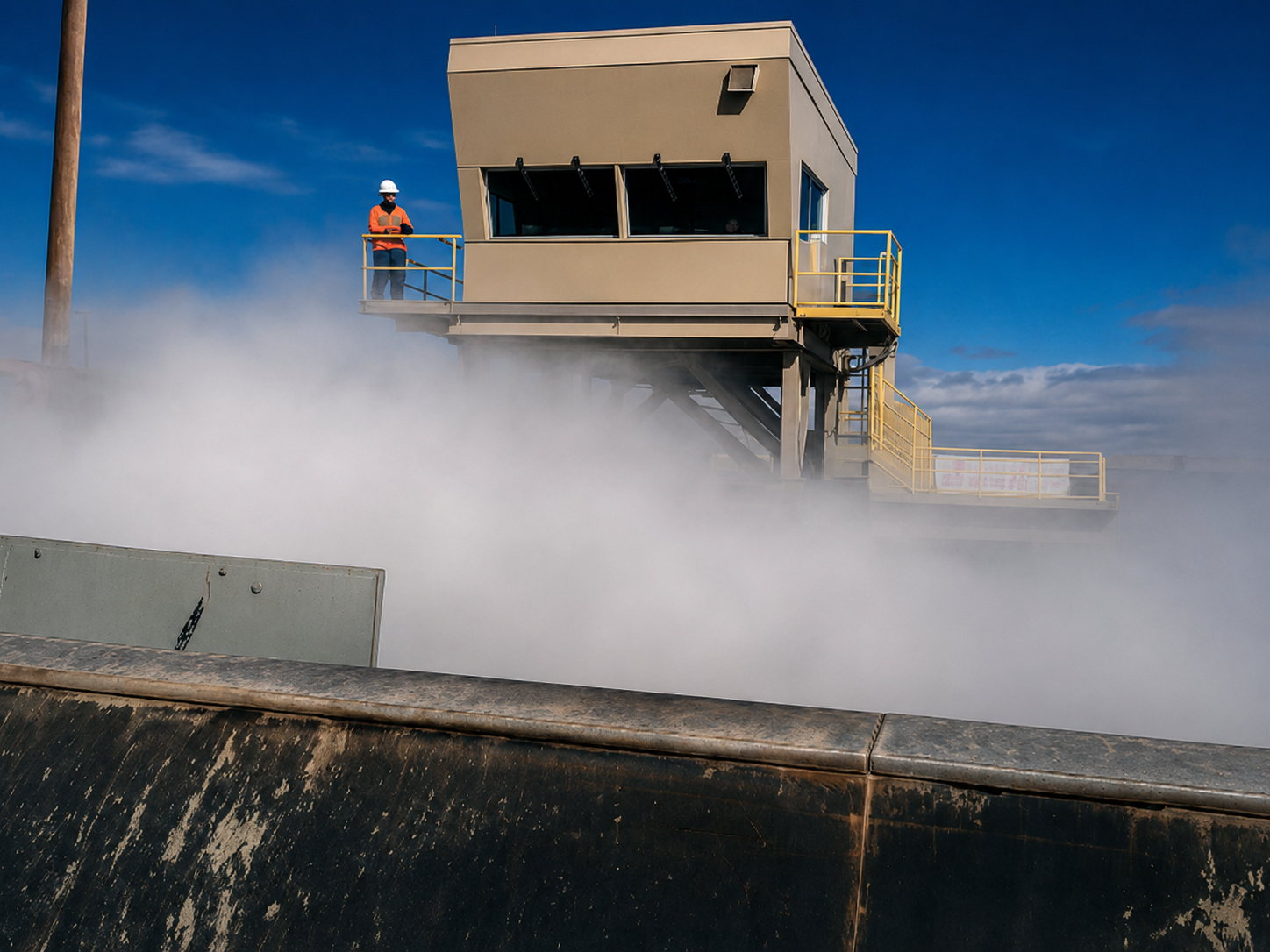
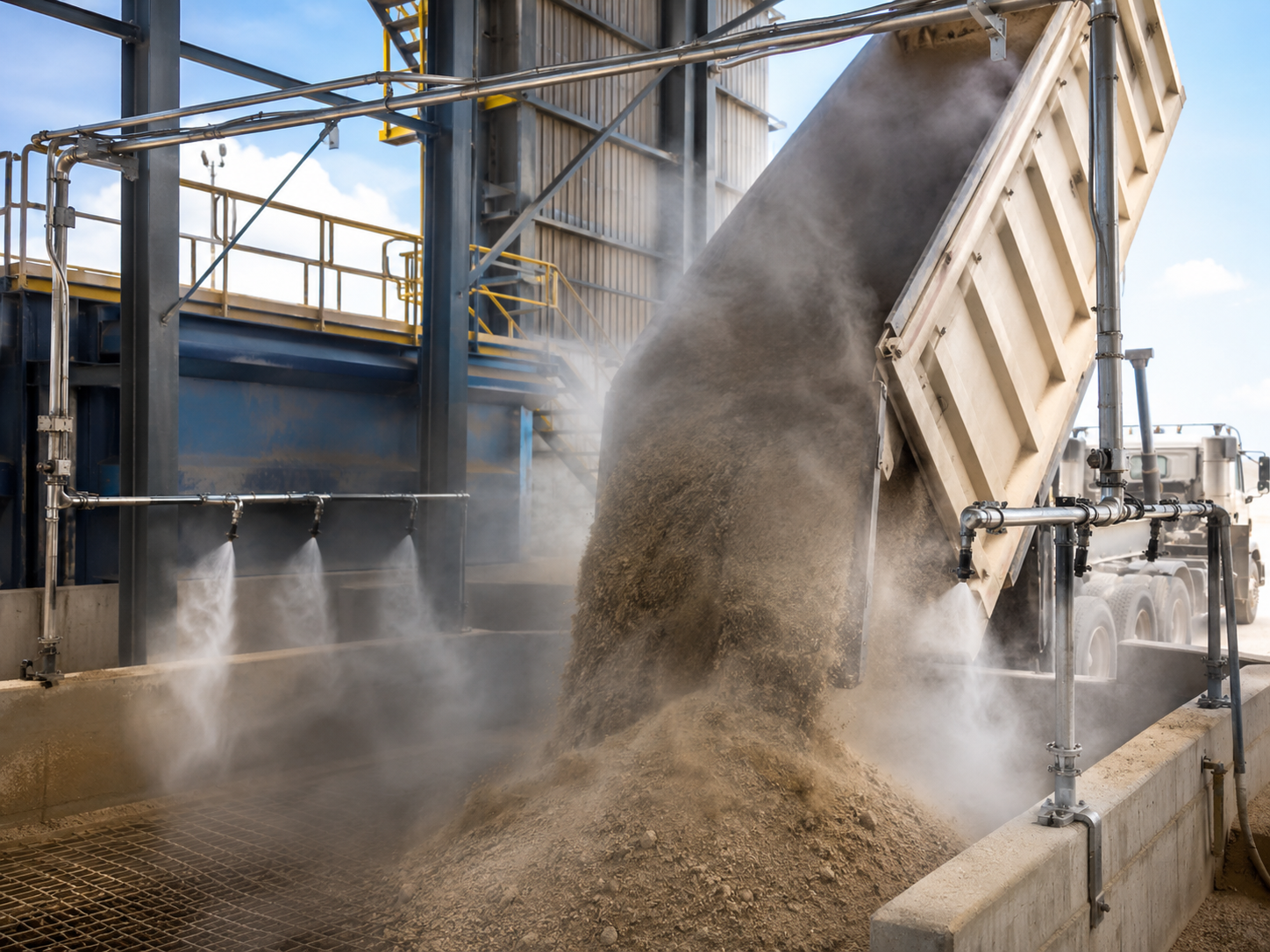
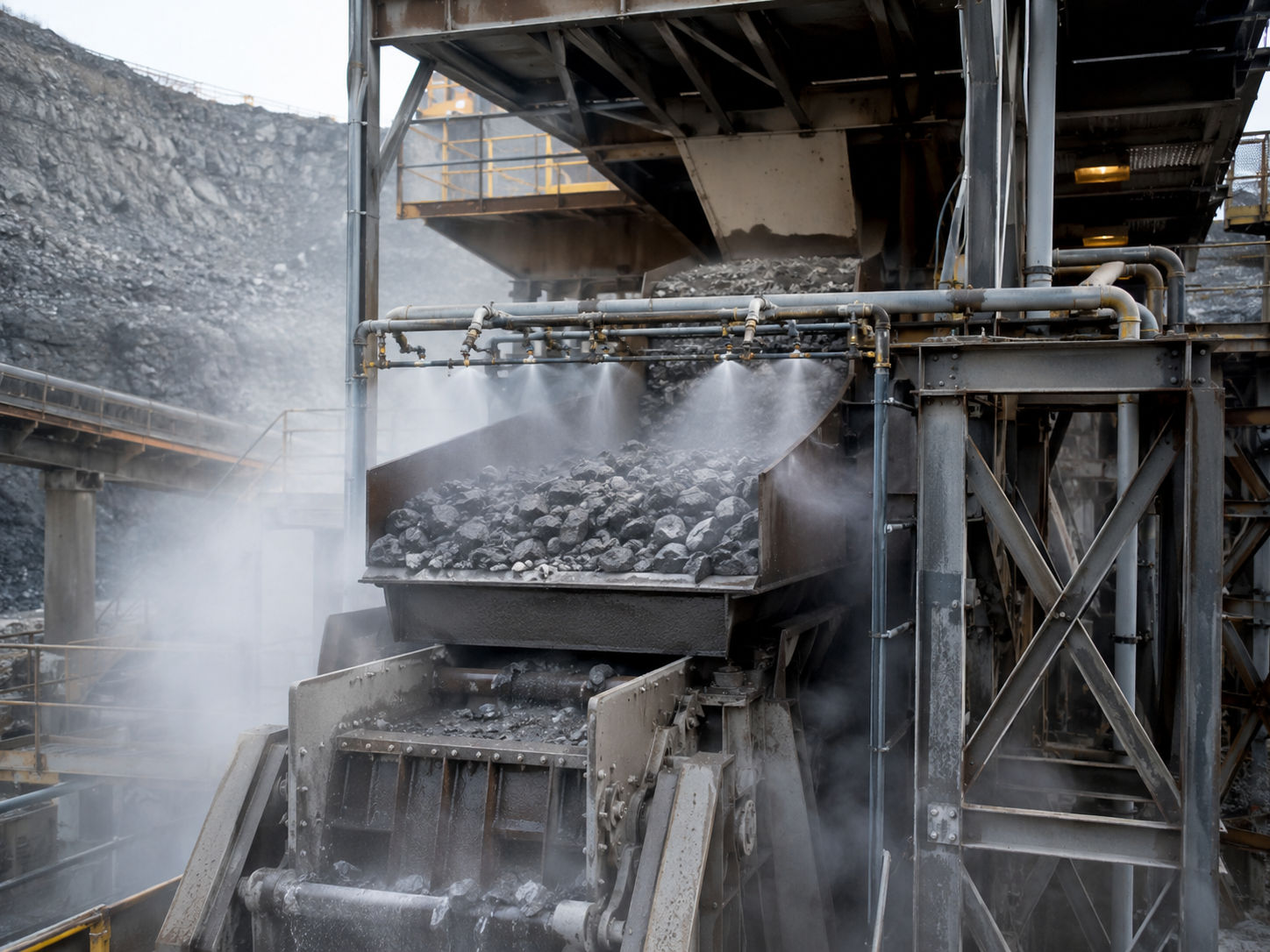
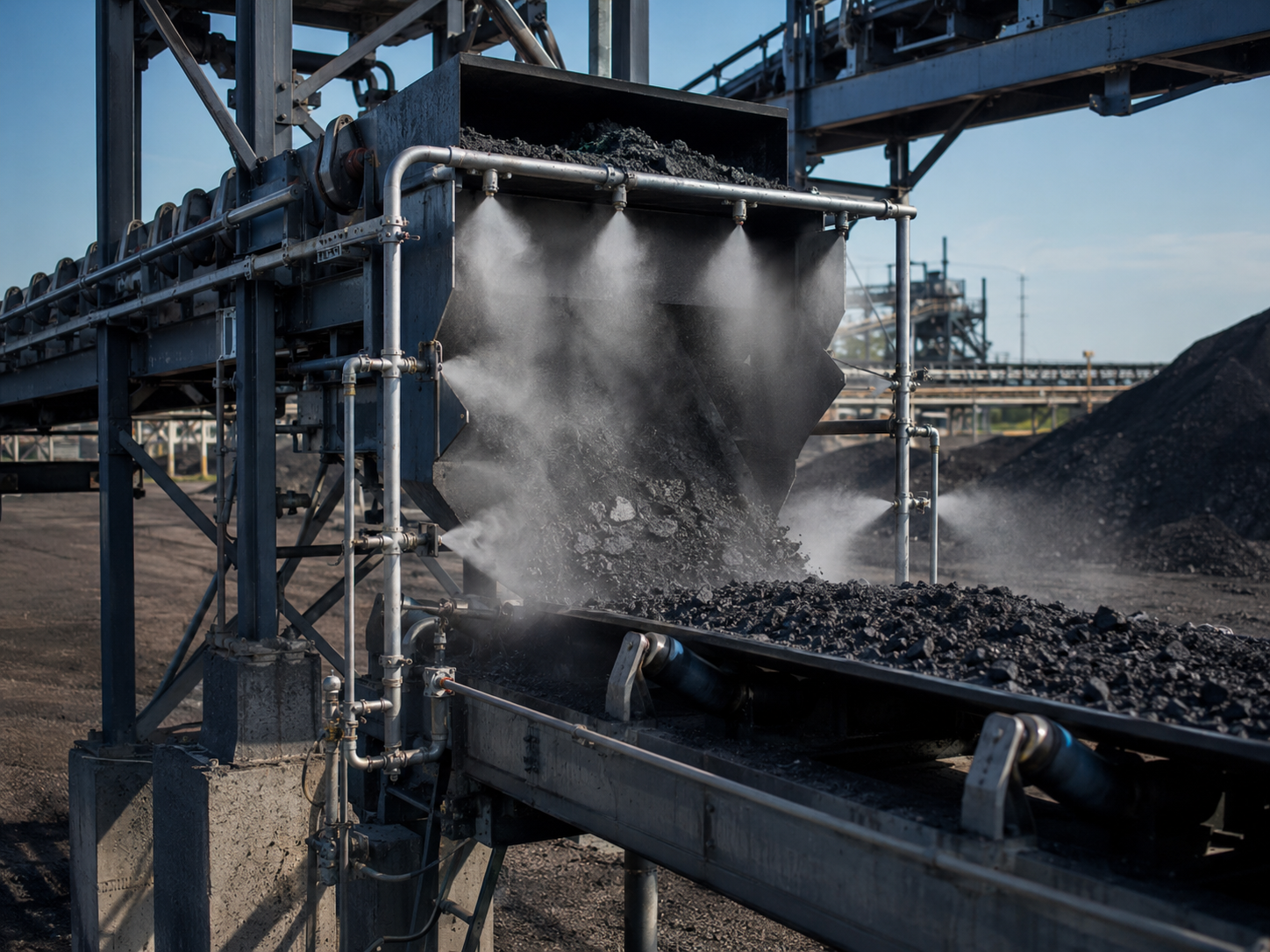

Designed for reliable industrial dust suppression with low water usage, modular installation and easy system integration.
Produces fine mist droplets suitable for capturing airborne dust particles.
Uses controlled water flow to reduce wastage and avoid excess material wetting.
Helps control dust without creating slurry, blockages or excessive moisture.
Can be integrated with conveyor or plant operation for automatic activation.
Modular and service-friendly design supports convenient inspection and upkeep.
Nozzle quantity, piping and controls can be configured according to site conditions.
Dry fog technology combines compressed air and water to form fine droplets that capture suspended dust close to the generation point.
Specially designed nozzles use resonance effect to shear water into droplets sized to match dust particles for maximum collision probability.
Dust particles collide with similarly sized fog droplets, adhering together and increasing in mass through a series of collisions.
As the agglomerated particles gain mass, they become heavy enough to settle back onto the main material being handled rather than remaining airborne.
Fine droplets evaporate after capturing dust, preventing material wetting while adding only 0.1% moisture by weight to the handled material.
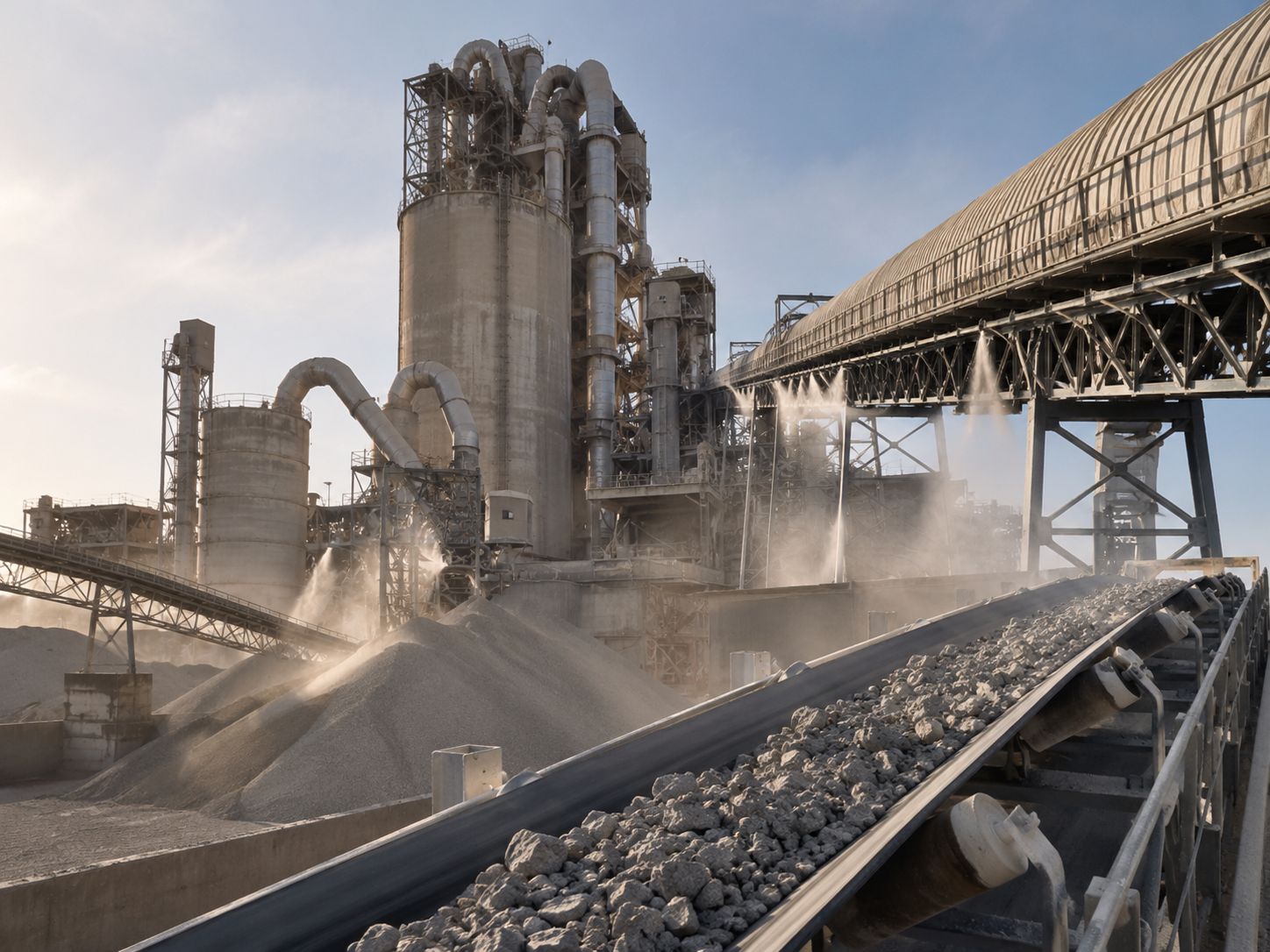
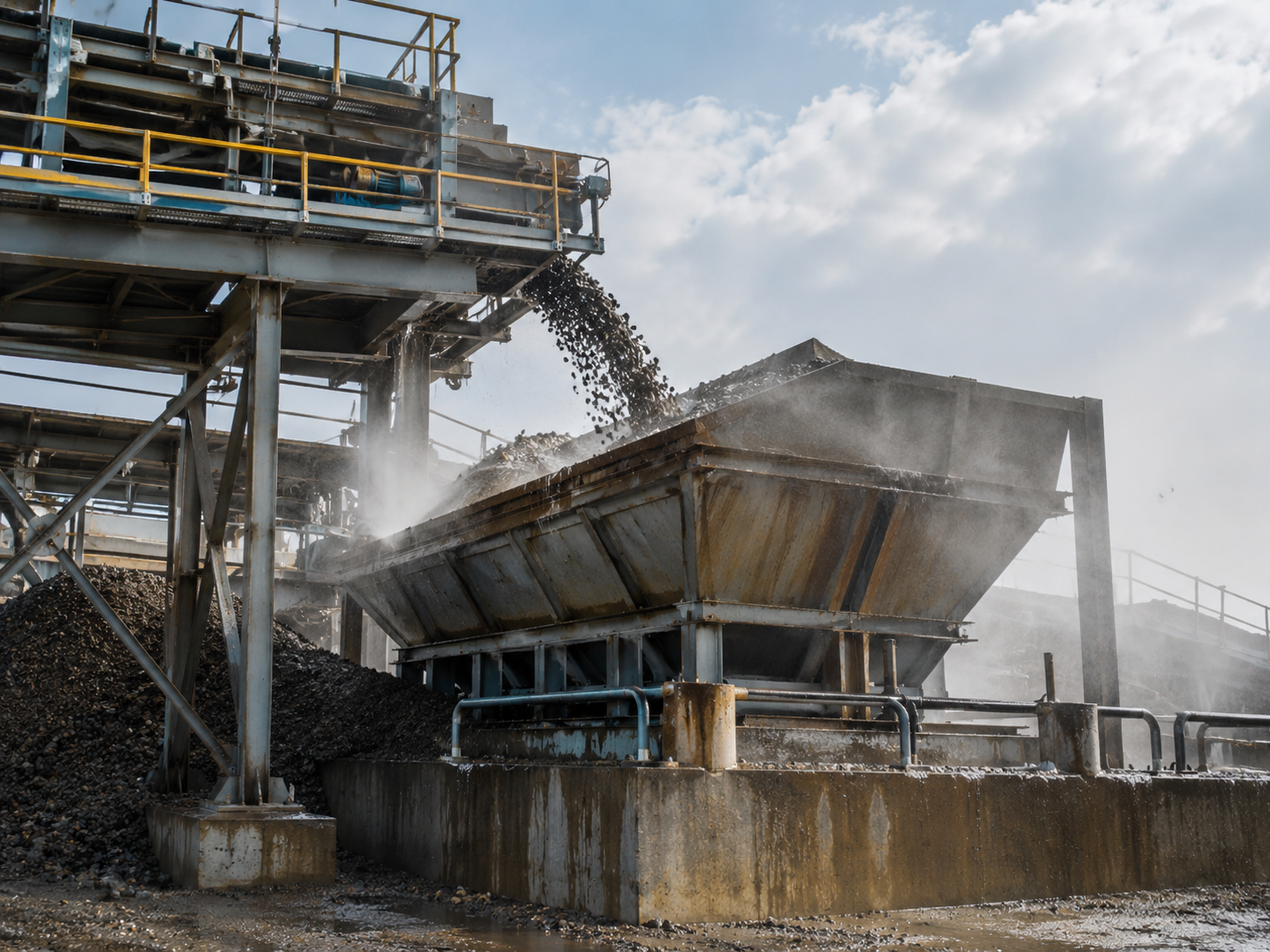
Suitable for dust-prone material handling and industrial processing areas.





| Parameter | Specification |
|---|---|
| Dust Particle Control Range | 1-800 microns |
| Water Addition | 0.1% maximum by weight of material handled |
| Nozzle Type | Dual fluid nozzle with resonance effect |
| Fog Droplet Size | Micronic (matched to dust particle size) |
| Application Method | Fog blanket at material transfer points |
| Installation Requirements | Covered/enclosed transfer points with skirts/hoods |
Get a customized dry fog dust suppression system designed according to your plant layout, dust generation points and operating requirements.
Get A Free Quotation